What’s in this Post
The Rule of Thirds
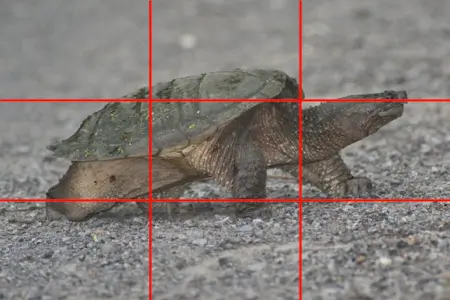 Image composition is a major topic in photographic circles. Every photographer is striving for the “perfect” shot, the one that encapsulates their photographic vision. If successful, the image will be one that everyone envies, one that each viewer wants to have in their portfolio. Consequently, all photographers are looking for a formula that represents their idea of perfection, and their sense of style. But how does one achieve it? As you might imagine, the answer isn’t straight forward. There are a number of things that come into play, each with a specific role and application. In this article, I’m going to focus on one in particular … The Rule of Thirds.
About the Rule
The rule of thirds is an idea that came about when people tried to determine a formula for placing a subject within the image frame. Initial attempts were random, simply placing the subject where it happened to be when the image was captured. But if you do this, and you have probably noticed this yourself, some of the images are visually appealing, while others are not.
If you look at the ones that were appealing, a pattern begins to emerge. The important element of the frame is located about a third of the way from the edge of the frame (horizontal, vertical, or both). Now, there is some human psychology behind this which I won’t get into as it isn’t important for the purposes of this article. Let me simply say that we, as humans, respond favorably to images created in this fashion.
That is where the name came from, The Rule of Thirds.
How Dows it Work
Well, the idea is that you break the image frame up into thirds, both horizontally, and vertically. This will give you a grid much like tic-tac-toe, with 4 internal intersection points. You determine the main element of your image, usually the eyes of a person or animal, or maybe the horizon of a scenic. Then place it on one of the lines, or ideally, at an intersection point.
Simple right?
Okay, so let’s take a look at it when you have your camera in hand. The steps are as follows:
- With your camera in hand in a proper shooting position, raise it up to your eye.
- Look at the frame through your viewfinder.
- Determine the main element of the image.
- Press the shutter button half way to lock the focus on that item.
- Adjust the framing so that the element is on one of the lines, or intersection points.
- Press the shutter button the rest of the way to capture the frame.
Focal Point
The next question that will likely pop up is, how do you know which line, or which intersection point to use? Unfortunately, the answer isn’t set in stone. My advice, if in doubt, take a shot with the main element positioned at various places, and choose your favorite in post. Over time, you will develop a visual style, and select a particular position for the situation.
Like most photographic techniques, the rule isn’t absolute. Think of the technique as a starting point, not an ending point. There are times when you might want to break, or even ignore it. That’s okay because that is what creative discovery is all about.
Conclusion
The Rule of Thirds is a powerful tool to have in your photographic bag. And while by itself, it won’t give you the perfect image. Using it will give you a strong starting point for your photographic style discovery.

Dave’s Newsletter
Discover the thrill of the great outdoors on my adventure website. Explore breathtaking hiking trails, conquer rugged terrain on your mountain bike, or capture nature’s beauty with your camera. All from your inbox. Adventure awaits!