What’s in this Post
Using a Flash for Wildlife Photography
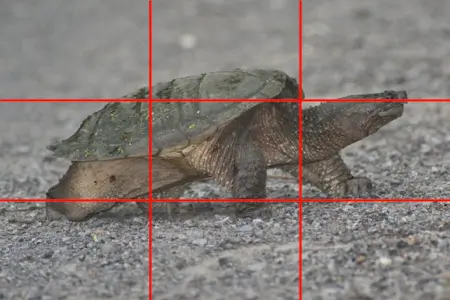
 You’ve probably noticed photographic rigs, besides the one include with this article, that contain a long lens, camera, and a flash. If you haven’t, do some sleuthing on the Internet. Also, you may notice that many of my shots are taken in bright sunlight. Well, you’re right, you’re not seeing things. And no, the flash isn’t there to make the rig look “cooler”. I shoot with a flash for wildlife photography, truth be known. And it makes up about 80 percent of my time. No joke! But it’s not for the reasons you might expect. A flash provides a couple of characteristics that are essential to the kind of shots I want to create.
Image Attributes
As a nature and wildlife photographer, I do most of my photographic work outside. That goes without saying. But because my focus is primarily birds, I find that I’m looking for specific attributes in my images:
- Catch Lights – the highlight in the eyes that you often see from notable wildlife photographers like Arthur Morris.
- Even Exposures – the shadows still exist (shadows create depth), but with a smaller difference between the light and dark areas.
- Stopped Motion – the ability to create a tack sharp image, even in low light or on windy, overcast days.
- Softness – a lack of harsh delineation to the light that accents the natural qualities of the subject.
Now, it isn’t that these attributes are specific to bird photography. In fact, some appear in other types of photography. As an example, catch lights and softness might be nice in glamour photography. The big difference is how you go about creating them. We’ll talk more about that in the next section.
As the article’s title suggests, a flash is my solution when photographing birds. But what you might not expect is that I use it in fill-mode, rather than full-mode. That’s right, fill-mode. I’m not looking to light up the world. I just want a little poof of light to create a glint in the eyes, lighten up the shadows, increase my shutter speed, or add high-quality, natural looking light to an image. And it works! My bird photography took a giant leap forward when I started using a fill flash.
Flash Modification
Another thing I do is use a flash modifier, in this case, a Better Beamer. This is a Fresnel lens, placed in front of the flash, that concentrates the light emitted. It has the effect of making the light go farther, or requiring less energy over smaller distances. As an example, the guide number on my flash is about 40 without a Better Beamer, and easily 80 with. Or from an energy perspective, I get 25 shots without before the batteries are exhausted, and I get 100 with. Your results will vary, of course, depending on the power of your flash, the area you are trying to light, and the batteries you use. But you get the idea.
Flash Only for Birds
As far as wildlife goes, I only use a flash for bird photography. I find that animals are scared by the flash, and you will only get a couple of shots before they leave the area. Something else to consider, you don’t want a large animal, say a buffalo, spooked by a flash. A stampede could be extremely dangerous to you and anyone else around. Some parks, like Yellowstone National Park in Wyoming for example, don’t allow the use of a flash for animal photography. For them, safety is a primary concern.
Conclusion
A flash for wildlife photography can be helpful in a number of situations. If used properly. The next time you go out to shoot birds, take a flash along and try it out.

Dave’s Newsletter
Discover the thrill of the great outdoors on my adventure website. Explore breathtaking hiking trails, conquer rugged terrain on your mountain bike, or capture nature’s beauty with your camera. All from your inbox. Adventure awaits!