What’s in this Post
Getting Close
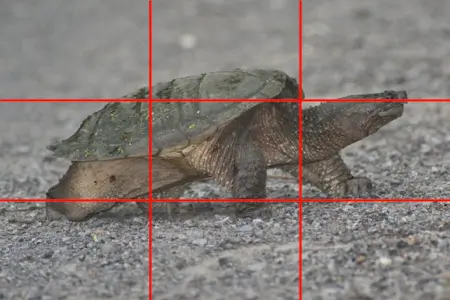
Wildlife photography is about getting that perfect shot. You know, the one where the subject occupies two-thirds to three-quarters of the frame, the eyes are tack sharp, the image has a narrow depth-of-field, and the exposure is perfect. The latter three are relatively easy. You simply adjust the camera’s settings to suit your photographic vision, and press the button. But the first often involves using more magnification, or getting close.
Magnification
Using more magnification is certainly an option, if you have it in your camera bag. Most people don’t. They can’t afford the amount of magnification they desire. For the longest time, I couldn’t. I’ve been taking photos for over 40 years, and didn’t purchase my 600mm lens until about 20 years had passed. When you’re talking over $10K for a lens like this, it’s easy to see why.
Getting Close
That leaves the second. Fortunately, this is significantly less expensive. It is more about knowledge than anything else. In the rest of this article, we’ll talk about some things you can do to make option two work for you.
Changing your position relative to your subject seems like an easy thing. You simply pick up your stuff, and take one or more steps. And that would be true if we were talking about a statue, or a vase full of flowers. Unfortunately, we’re not. Wildlife, in general, is wary of people. And as such, will move away at the most inopportune times.
In my experience, this tends to be when the subject fills one-quarter to one-third of the frame. It’s not a hard-and-fast-rule, but you get the idea. It’s simply too far away to be considered a perfect shot.
So, what do you do?
Noise
First, and foremost, you need to be quiet. No talking to others in your party, no humming to yourself … even in whispers. Sound carries, especially in wooded areas, or over water. Wildlife is tuned to hear things that we might not, and they’re nervous. It’s a survival trait. So keep the noise down will help you in your getting close efforts.
While I’m on the topic of noise, I’d like to say a word about bird calls. Many people use them to attract wildlife, and bring them to a specific location. These can take many forms, most often special whistles, or recorded sound on a cell phone. They are generally affective, but not in the fashion you expect. In fact, it’s likely the opposite.
If we take birds as an example, using calls generally has two results. First, the call is interpreted as a threat, the bird’s anxiety increases, and it leaves the area. Second, the bird interprets the call as a rival, it’s anxiety increases, and the bird comes to investigate. Since many birds are territorial, this often results in a fight. So while you will have some success attracting the birds, you are causing the bird anxiety, and ultimately, harm.
The bottom line, if you are considering the use of bird calls, please don’t.
Camouflage
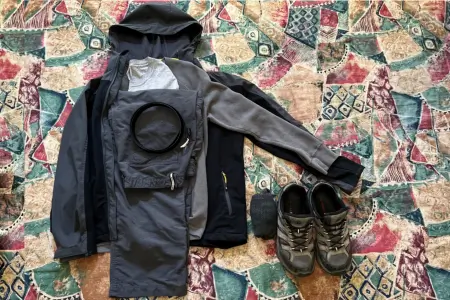
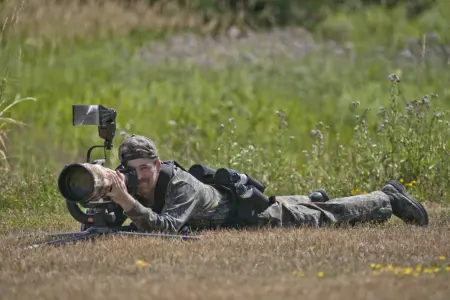
The next thing you can do is blend into the background. Wildlife looks for unfamiliar silhouettes, like the outline of a person, and reacts accordingly. This is the purpose behind camouflage. It changes your appearance so you blend into the background. There are many types and color schemes available. Pick the one that matches well with your intended purpose.
I can’t say this enough, camouflage works. I have heard a number of people say that it isn’t necessary. And that may be true, in some circumstances. But in my experience, if you want to get consistently close, you need to use camouflage. Failing this, darker earth-tones are good … greens, browns, dark blues, dark reds, and blacks. Leave the eye catching, bright colors, at home.
Blinds
Blinds are obstructions, situated between you and your intended subject. Their main purpose is to remove your silhouette from the background. This is similar to camouflage, except that with blinds, only a minimal part of you is visible (usually the top of your head and your lens). Another difference is that you generally don’t wear blinds, although that is changing with the release of products like LensHide from a company called LensCoat.
There are two general categories of blinds, those that are naturally occurring, and those that are available commercially. The naturally occurring type consists of trees, rocks, bushes, hills, and such. Anything in nature that you can hide behind and use to obscure your presence. There are many types available commercially; semi-permanent buildings, portable tent-like enclosures, blankets, and walls. Generally, you can move these about with ease. But once in place, they tend to stay put for the duration of the activity. Look at companies like Ameristep on the Internet, for more information.
Inching
I use the term to refer to the process of inching closer to your subject, while hiding in plain sight. It is an art … plain and simple. Some people are really good at it, and some are not. At first, I fell into the latter group, but have improved significantly over the years by following a couple of simple rules:
- Move slowly, no sudden or erratic movements.
- Move in intervals. Take a step, then pause and wait for your subject to settle down. Take another step, and pause again. Repeat this until you get to the position you want.
- Take your time.
The idea here is to convince your subject that you are not a threat, that you are simply going about your business.
As an example, I wanted to photograph a group of Black Skimmers just outside of Merritt Island National Wildlife Refuge a few years ago. Now, if you know anything about Black Skimmers, you will recognize that they are extremely nervous birds. They will fly away at the slightest provocation. So getting close is a monumental task. Using the technique outlined above, I managed to get within about 6 meters (20 feet) of these birds. It took some time (about an hour). But at this distance, I could easily fill the frame, even with modest equipment.
Conclusion
Getting close can be a difficult task. But by using the simple techniques that I’ve outlined above, you will be well on your way to closing the distance, and getting that perfect shot.
Note: Thanks to John Boland, a talented photographer in his own right, for taking time out of his busy schedule to capture this image.

Dave’s Newsletter
Discover the thrill of the great outdoors on my adventure website. Explore breathtaking hiking trails, conquer rugged terrain on your mountain bike, or capture nature’s beauty with your camera. All from your inbox. Adventure awaits!